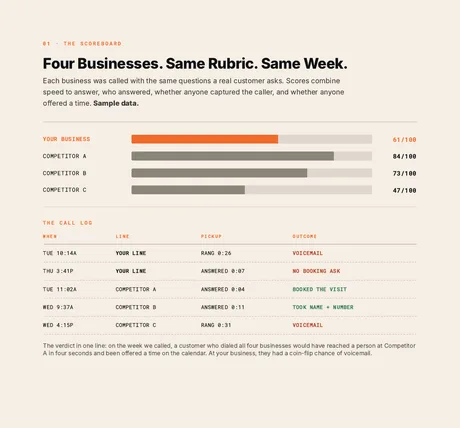
 See a Sample Report (PDF)
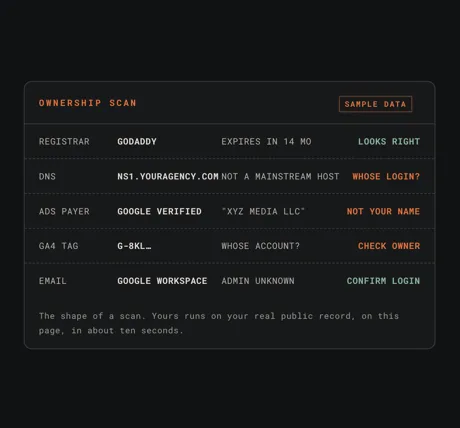 See What a Scan Returns
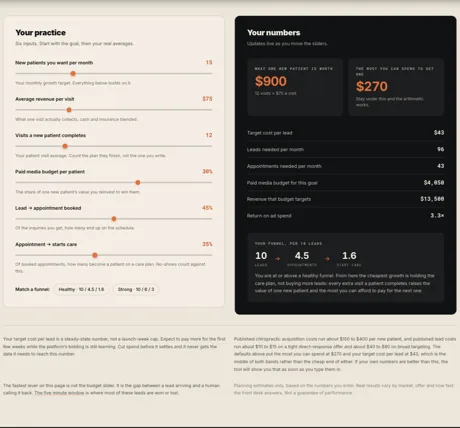 Run the Numbers
 Read the Latest
White hat and black hat are tidy labels for a distinction that matters in a very practical way: whether what was done to your website still works in two years, and whether you can undo it if it does not.
For a contractor who bought inexpensive SEO from an unfamiliar vendor, the second half is the part that bites.
What the cheap version usually involves
Low-cost local SEO packages tend to rely on a small set of tactics that produce fast movement and age badly.
Bulk directory submissions. Hundreds of listings on sites nobody visits, often with slightly different business names or phone numbers. Inconsistent listings actively hurt local ranking, so this frequently moves you backwards while showing an impressive report.
Purchased links. Links from private networks or paid placements. These work until the network is identified, at which point the link equity disappears and sometimes takes more with it.
Spun or generated content. Fifty town pages assembled from one template. Cheap to produce, read as duplicate, and leave the site looking thin.
Keyword stuffing in the footer. A block of town names in small grey text at the bottom of every page. This stopped working over a decade ago and still ships weekly.
Why it matters more for a service business
Two reasons specific to contracting and home services.
Your name is your asset. Inconsistent listings scattered across hundreds of directories damage the local signals that decide the map pack, and cleaning them up is slow, manual work that costs more than the original package did.
You usually cannot undo it. Purchased links are not yours to remove. Directory listings created with an email address you do not control cannot be corrected. The vendor leaves and the liability stays on your domain.
What legitimate work looks like
It is less exciting and it accumulates.
- A site that loads fast and works on a phone, because most of your customers are on one.
- A page per service you actually sell, specific enough that somebody could tell you apart from a competitor.
- Town pages only where you genuinely work, with something true about each town in them.
- A complete, accurate business profile, and a review habit rather than a review campaign.
- Links you earned: suppliers, manufacturer dealer listings, trade associations, local press, work you sponsored.
None of it produces a chart that jumps in week three. All of it survives an algorithm update, because none of it depends on a loophole.
How to check what was done to you
You do not need tools to spot most of it.
- View your homepage source and search for your town names. A hidden block of them is a bad sign.
- Search your business name in quotes. Look at what directory listings exist and whether the phone numbers match.
- Ask the vendor for the list of links built. Legitimate work produces a list somebody is happy to show you.
- Read two of your town pages side by side. If swapping the names leaves both true, they were generated.
If several of these look wrong, the fix is usually cleanup before anything else. It is unglamorous, it produces no chart for a quarter, and it is the only thing that makes later work hold.