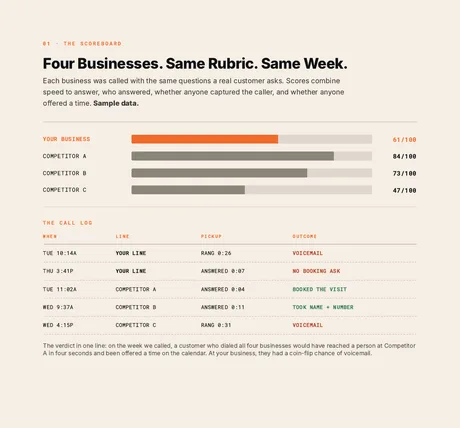
 See a Sample Report (PDF)
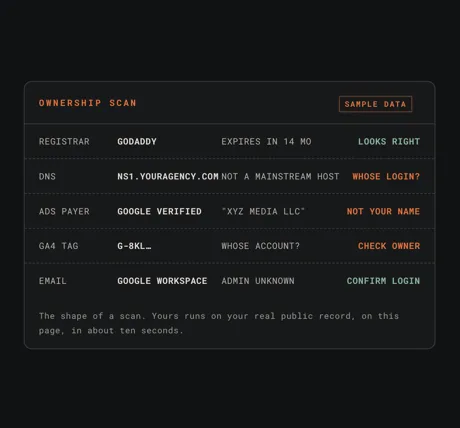 See What a Scan Returns
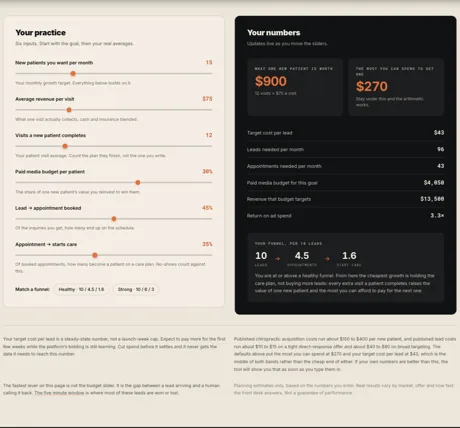 Run the Numbers
 Read the Latest
Schema markup is structured data you add to a page to tell search engines what the page is, in a format they parse rather than interpret.
It is genuinely useful and routinely oversold. It is worth being precise about both.
What schema does and does not do
It does not improve rankings directly. There is no boost for having it. Google has said this repeatedly and the evidence agrees.
It does change how you appear, which changes click-through, which is a real outcome. Star ratings, FAQ expanders, breadcrumbs, event details and business information in a knowledge panel all come from structured data.
It increasingly decides whether you are quotable. Machine-readable facts are easier for an answer engine to attribute than the same facts buried in prose. As more searches end in a generated answer, being parseable matters more than it used to.
So: not a ranking lever, a presentation and attribution lever. That is still worth having.
The four that matter for a local service business
LocalBusiness, or the specific subtype that fits you. Name, address, phone, hours, service area, price range, geographic coordinates. This is the foundation. It should match your Google Business Profile exactly, because an inconsistency between the two is worse than having neither.
Service. One per service you actually sell, with a description and the area served. This is what lets a search engine understand that a page about drain cleaning is a service offering rather than an article about drains.
FAQPage, on pages that genuinely have questions and answers. It can produce expanded results, and it is the single easiest way to make a page quotable. Do not fabricate questions to qualify: the markup must describe content actually visible on the page.
BreadcrumbList. Small, cheap, and it replaces a raw URL in the result with a readable path.
Almost everything else is situational. Review markup on your own site is heavily restricted and frequently ignored. Organization matters at the site level, once. Article helps on a blog and does little on a service page.
Getting it right
Use JSON-LD. It sits in a script tag, it does not entangle with your markup, and it is the format Google recommends. Microdata attributes scattered through HTML break the first time somebody edits the page.
Describe what is on the page. Markup claiming things the page does not say is a manual action risk. If the FAQ schema lists six questions, six questions should be visible.
Be consistent across the site. One address format, one phone format, one business name, everywhere, matching the profile.
Validate the rendered page, not the template. A template that emits perfect JSON-LD proves nothing about what the live URL serves, especially where a plugin or a tag manager injects a second, conflicting block. Two LocalBusiness blocks with different phone numbers is a common and self-inflicted problem.
The check most people skip
Pull up your own live page, view source, and read the structured data as a stranger would.
Ask three questions:
- Is there exactly one block for each type, or has something added a duplicate?
- Does every fact in it match what is on the page and in the business profile?
- Would somebody who knew nothing about your business understand what you sell and where, from this block alone?
If the answer to the third is no, the markup is decorative. Fix that before adding a fifth type.
Where it pays off
For a local service business the realistic wins are a more complete business listing, FAQ real estate under your result, breadcrumbs instead of a URL, and a better chance of being cited accurately when an answer engine summarizes the category.
None of that moves you from page three to page one. All of it makes page one work harder, which is usually where the remaining upside is.