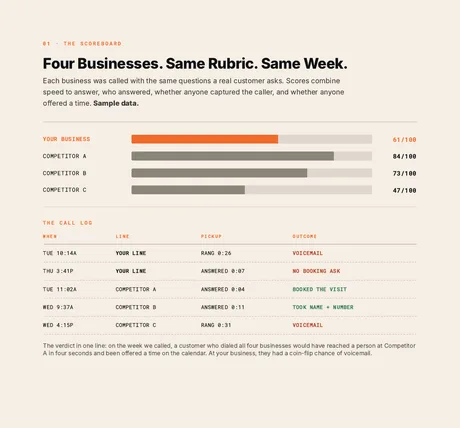
 See a Sample Report (PDF)
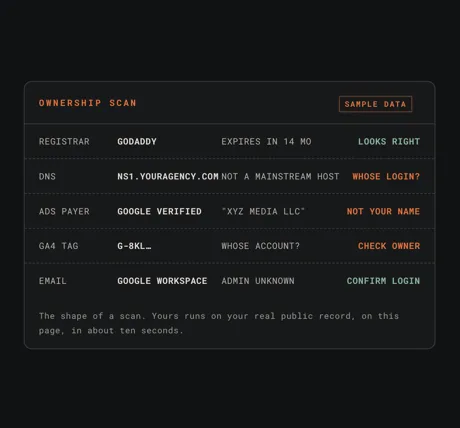 See What a Scan Returns
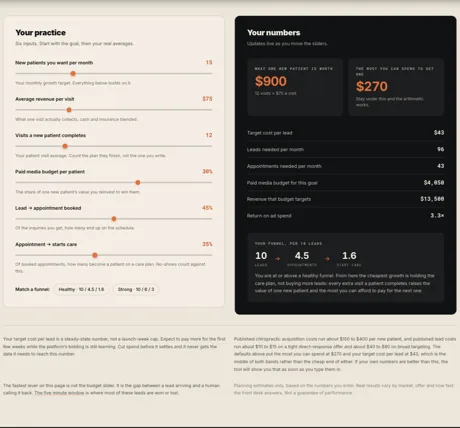 Run the Numbers
 Read the Latest
Reputation management for a medical practice is not the same job it is for a restaurant, and the difference is legal rather than stylistic.
When a restaurant replies to a bad review with "we are sorry your table was not ready," nothing is disclosed. When a practice replies with "we are sorry your appointment ran late," it has just confirmed in public that the reviewer is a patient.
That confirmation is a disclosure of protected health information. It does not matter that the patient posted first.
The rule that surprises people
A patient can say anything they like about their own care in public. That is their information to share.
The practice cannot respond in kind. The patient posting does not waive anything on your side, and regulators have taken enforcement action against practices that replied with clinical detail while defending themselves against an unfair review.
So the reply that feels most natural, correcting the record, is the one that creates the exposure.
What a safe response looks like
The workable pattern acknowledges nothing specific and moves the conversation offline:
Thank you for the feedback. We take all patient concerns seriously and would like the opportunity to discuss this directly. Please contact our office manager at [number].
It is generic on purpose. It does not confirm a relationship, does not reference a visit, does not mention a treatment or a date.
What it must never contain:
- Any confirmation that the person was seen at the practice
- Any clinical detail, however small
- Any correction of the reviewer's account of their care
- Any dates, procedures or staff names
If a reviewer is factually wrong and it is damaging, the answer is a phone call and, where warranted, a platform dispute. Not a public correction.
Volume and recency beat damage control
Most practices come to reputation management because of one bad review. That is usually the least important part of the problem.
A single one-star review inside forty recent reviews is close to invisible and arguably helps, because a perfect profile reads as curated. The same review inside eleven total reviews is the profile.
So the durable work is not removal. It is making sure satisfied patients are asked, routinely and at the right moment, which for most practices is the end of a visit that went well rather than an email three weeks later.
Recency matters as much as volume. A profile whose newest review is eighteen months old suggests a practice that has stopped paying attention, whatever the average says.
Asking without creating a new problem
Review requests are themselves patient communication, which brings their own constraints.
- Do not name the procedure in the request. A text saying "how was your vasectomy consultation" is a disclosure to anyone who picks up that phone.
- Keep it generic and short. A visit happened, a link follows.
- Use a channel the patient agreed to. Consent for contact method is not incidental.
- Never incentivize. Paying for reviews violates platform policy and, for regulated providers, raises additional issues.
Where the profile itself does the work
Much of what people call reputation is actually profile completeness. Hours that are wrong, an address that moved, a phone number that rings nowhere, and a category set once in 2017 all cost more trust than a mediocre review does.
Before worrying about sentiment, confirm the basics are right on Google, on the major directories, and anywhere insurance listings pull from.
A workable cadence
- Weekly: read new reviews, respond within a few days using the generic pattern, flag anything clinical to whoever owns the relationship.
- Monthly: check profile accuracy across the main platforms.
- Continuously: ask satisfied patients, at the visit, with a channel they agreed to.
Reputation for a practice is not a campaign. It is a habit with a compliance constraint, and the constraint is the part most agencies get wrong.