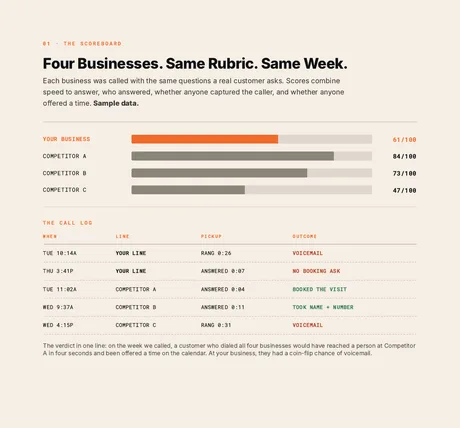
 See a Sample Report (PDF)
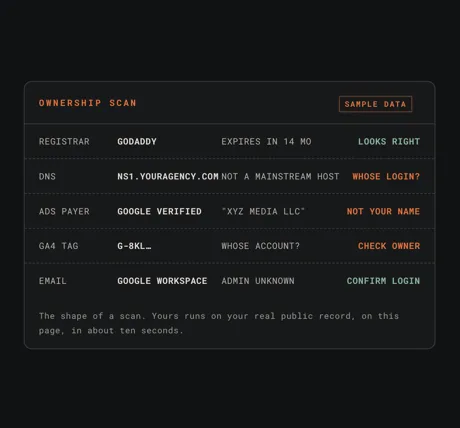 See What a Scan Returns
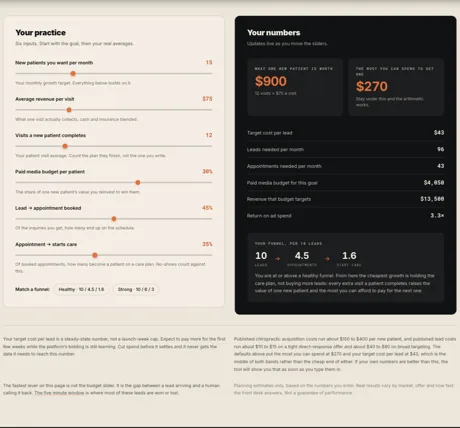 Run the Numbers
 Read the Latest
Every major ad platform runs some version of the same idea. Google calls it Quality Score. Meta reports quality, engagement and conversion rate rankings. The mechanics differ; the principle does not.
Platforms make money when people click and stay. An ad that matches what somebody wanted earns the platform more per impression, so the platform charges you less for it. Relevance is a discount, not a grade.
What it is actually measuring
Three things, in every version of it:
- Does the ad match the query or the audience? Somebody searching for emergency drain cleaning should see an ad about emergency drain cleaning, not one about plumbing services generally.
- Does the page match the ad? Clicking an ad about water heater replacement should land on a page about water heater replacement, not the homepage.
- Do people behave as though it was a good match? Click-through, and whether they stayed.
The third is the one you cannot fake, and it is the one that compounds.
Why it matters more for a small local advertiser
Because you are not going to outspend anyone.
A national competitor with ten times your budget can absorb a poor relevance score. You cannot. Relevance is the one lever that lets a smaller advertiser occupy a position a bigger one is paying more for, and it is available without spending another dollar.
The differences are not marginal. Between a well-matched account and a careless one, the effective cost of the same position routinely differs by a factor that decides whether the channel works at all.
What drags it down on a local account
One campaign for everything. Emergency work, scheduled installs and maintenance plans in a single ad group means the ad cannot match any of them well.
Sending all traffic to the homepage. This is the single most common defect we find. The homepage is about your company. The searcher is thinking about their problem.
Broad match with no negatives. Ads showing for jobs you do not do, or for people looking for DIY instructions, drag the whole account down while spending real money.
Ad copy that could belong to any competitor. If your ad and four others say the same thing, nothing distinguishes yours and click-through tells the platform so.
What to fix, in order
- Split the account by intent. Emergency, scheduled, and maintenance are different buyers. Separate campaigns, separate budgets, separate pages.
- Build a page per service you advertise. It does not need to be elaborate. It needs to be about the thing the ad promised.
- Add negatives weekly for the first month. Read the search terms report and exclude what does not belong. This is the highest-return hour in a new account.
- Write ads that name something specific. Response time, licensing, a guarantee you actually offer, the neighborhoods you cover.
What not to do
Do not chase the score itself. It is a diagnostic, not a target. An account with a perfect relevance score and no booked jobs has optimized the wrong number.
The purpose of improving relevance is to buy the same customers for less. If the score improves and the phone does not ring, something upstream is wrong and the score will not tell you what.