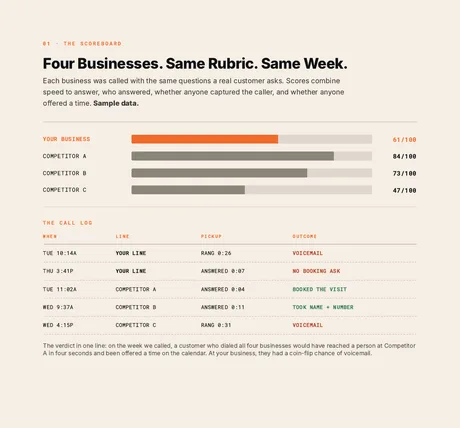
 See a Sample Report (PDF)
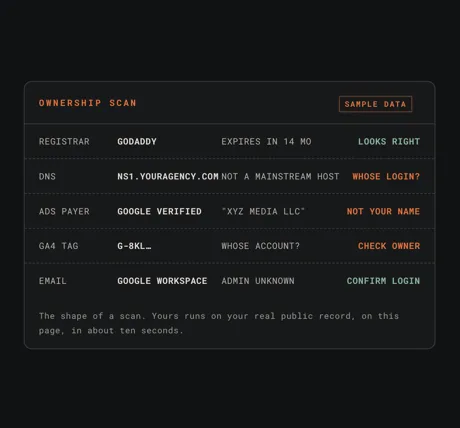 See What a Scan Returns
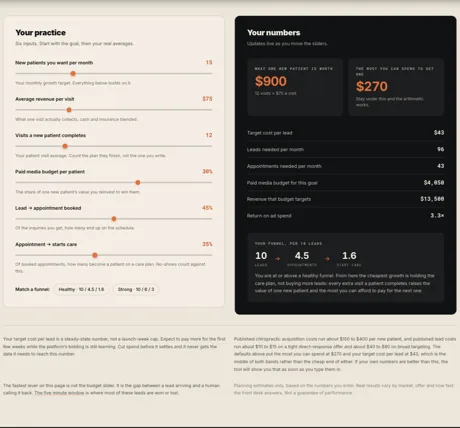 Run the Numbers
 Read the Latest
Local Service Ads are the block at the very top of a local search result, above the regular ads and above the map. Each listing carries a green Google Guaranteed badge, a rating, and a call button.
Two things make them different from everything else Google sells. You are charged per lead, not per click. And you have to be verified to appear at all.
What the badge actually means
Google Guaranteed is a background and licence check, not an endorsement of your work. To carry the badge a business generally needs to pass a business-level background check, verify licences and insurance for its category, and maintain a minimum review rating.
For a customer it means Google will refund what they paid for the job, up to a lifetime cap per business, if the work was unsatisfactory. It is a modest promise financially. It is a large one psychologically, which is the point.
The economics are genuinely different
In Google Ads you pay for a click and hope it becomes a call. In Local Service Ads you pay for the lead itself, which changes the arithmetic in two useful ways.
You are not paying for research traffic. Somebody comparing five companies and clicking all of them costs you five clicks in search and nothing here until they actually contact you.
Disputes are possible. A lead that was outside your service area, for a service you do not offer, or an obvious wrong number can be disputed, and credited leads do not count against the budget. This is not automatic. It requires somebody reviewing leads weekly, and most businesses never do it.
Who they work well for
The fit is strongest when three things are true:
- The job is urgent. Plumbing, HVAC, locksmith, pest, water damage. Somebody with a problem right now, choosing fast, on a phone.
- The work is licensed. The verification that gates the badge is a barrier to your competitors too, and a category where everyone is licensed is a category where the badge sorts on trust rather than on budget.
- You answer the phone. Response time affects ranking in this unit more directly than almost anywhere else in Google's ecosystem. A business that misses calls will pay for leads it never converts and slide down the block while doing it.
Who they work poorly for
- Considered purchases with long sales cycles. If the decision takes three weeks and four conversations, a per-lead unit aimed at immediate intent is the wrong shape.
- Businesses with thin or old review profiles. Rating is a ranking input here. Arriving with eight reviews against competitors carrying two hundred is an expensive way to learn that.
- Anyone who cannot answer within minutes. This is the single most common reason an LSA account underperforms, and no budget change fixes it.
What it costs
Cost per lead varies enormously by category and market, and anyone quoting a single national figure is guessing. What is more useful is knowing what drives it: category competitiveness, your review profile, your responsiveness, and how tightly you draw the service area.
The budget is set weekly and Google will spend it unevenly across the week. Expect variance, and judge the account on a month rather than on a Tuesday.
How it fits with everything else
Local Service Ads do not replace search ads, and they do not replace local SEO. They sit above both and they answer a narrower question.
A sensible order for most local service businesses:
- Google Business Profile first, because it is free and it feeds the review profile that LSA ranking depends on.
- Local Service Ads next, because the unit sits above everything and charges per lead.
- Search ads after that, for the services and the intent LSA does not cover.
- Organic underneath all of it, as the thing that compounds.
Getting verified takes time, sometimes weeks, and the paperwork stalls more applications than it rejects. Start it before you need it.