Contractors & Home Improvement
Roofing, siding, hardscape, remodeling. Including James Hardie contractors.
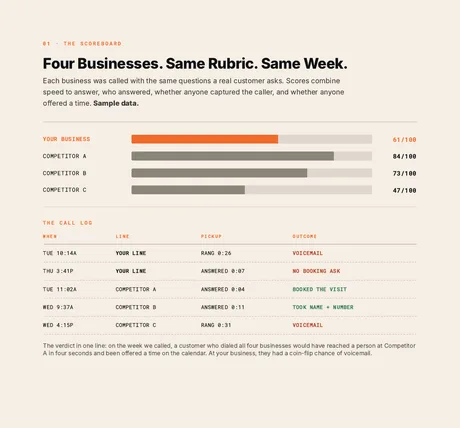 See a Sample Report (PDF)Six pages. Five recorded calls, one timed form fill, scored by AI against published standards.What it findsCalls ringing out to voicemailAnswered calls that never ask for the jobForm fills that wait hours for a humanThe competitor winning the first call
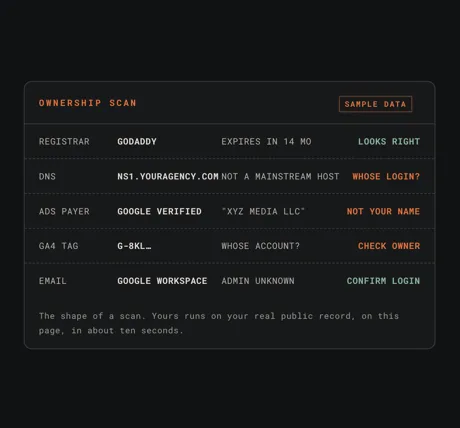 See What a Scan ReturnsPublic records read from the outside, in about ten seconds, with nothing to install.What it readsThe registrar, and when the domain expiresDNS, and whose nameservers those areThe business name paying for the adsThe GA4 tag and the email host
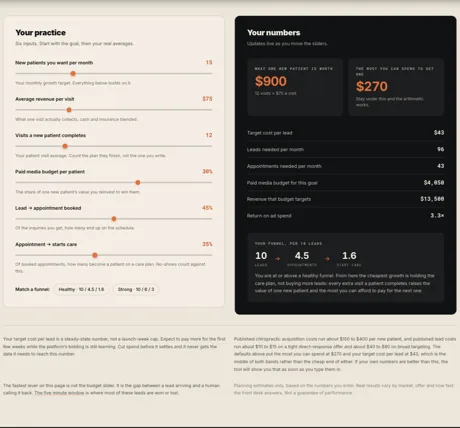 Run the NumbersSix sliders, figures that move as you drag them, and nothing you type leaves the page.What it works outWhat one new patient is worthThe most you can spend to win oneLeads and appointments you need a monthThe paid budget that hits the goal
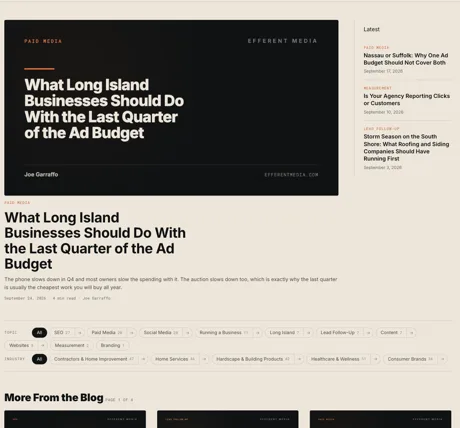 Read the LatestWritten off real Long Island accounts, the things we get wrong included.What it coversPaid media and budget decisionsSEO and the local map packLead follow-up and response timeRunning a Long Island business
See a Sample Report (PDF)Six pages. Five recorded calls, one timed form fill, scored by AI against published standards.What it findsCalls ringing out to voicemailAnswered calls that never ask for the jobForm fills that wait hours for a humanThe competitor winning the first call
See What a Scan ReturnsPublic records read from the outside, in about ten seconds, with nothing to install.What it readsThe registrar, and when the domain expiresDNS, and whose nameservers those areThe business name paying for the adsThe GA4 tag and the email host
Run the NumbersSix sliders, figures that move as you drag them, and nothing you type leaves the page.What it works outWhat one new patient is worthThe most you can spend to win oneLeads and appointments you need a monthThe paid budget that hits the goal
Read the LatestWritten off real Long Island accounts, the things we get wrong included.What it coversPaid media and budget decisionsSEO and the local map packLead follow-up and response timeRunning a Long Island business
Read the LatestWritten off real Long Island accounts, the things we get wrong included.What it coversPaid media and budget decisionsSEO and the local map packLead follow-up and response timeRunning a Long Island business
See a Sample Report (PDF)Six pages. Five recorded calls, one timed form fill, scored by AI against published standards.What it findsCalls ringing out to voicemailAnswered calls that never ask for the jobForm fills that wait hours for a humanThe competitor winning the first call
See What a Scan ReturnsPublic records read from the outside, in about ten seconds, with nothing to install.What it readsThe registrar, and when the domain expiresDNS, and whose nameservers those areThe business name paying for the adsThe GA4 tag and the email host
Run the NumbersSix sliders, figures that move as you drag them, and nothing you type leaves the page.What it works outWhat one new patient is worthThe most you can spend to win oneLeads and appointments you need a monthThe paid budget that hits the goal
Read the LatestWritten off real Long Island accounts, the things we get wrong included.What it coversPaid media and budget decisionsSEO and the local map packLead follow-up and response timeRunning a Long Island business
Long Island · Hardscape & Building Products
Two audiences, one story, told without contradicting itself.

How does a building products manufacturer market to both dealers and homeowners?
By running them as two connected programs rather than one blended one. The homeowner program creates demand and sends it to dealers by name. The dealer program gives those dealers co-op funds, local assets and training so they can convert it and so they keep choosing to stock you. Most manufacturers run one well and confuse the other audience with it.
Brands whose demand has to arrive at somebody else’s counter, and the supply houses on the other end of that handoff.
 Nicolock
 Aboff’s Paints
 Century
The structural problem
A homeowner searching for pavers on Long Island finds dealers, contractors, big box retailers and you. If your marketing competes with your own dealers for that click, you are paying to make your channel resent you.
The dealer buys inventory. The homeowner buys a patio.
By name, by town, and measurably.
Most of it goes unclaimed every year.
The alternative is to own the brand and category demand, then hand it over with the dealer's name on it. It is harder to measure and it is the only version that compounds.
By program
Brand demand is yours to build and somebody else’s to convert. Every one of these is about surviving that gap.
What is the difference between these two products, what does it really cost, how long does it last. Homeowners search this for months and manufacturers answer it badly, which leaves the whole category to whoever writes it down properly.

A dealer locator that works, dealer pages that rank, and a handoff with a number on it. Assumed referrals are the reason channel partners stop believing the program.

Not because dealers do not want the money. Because claiming it is harder than the money is worth. Fixing the process is the cheapest growth on the plan.
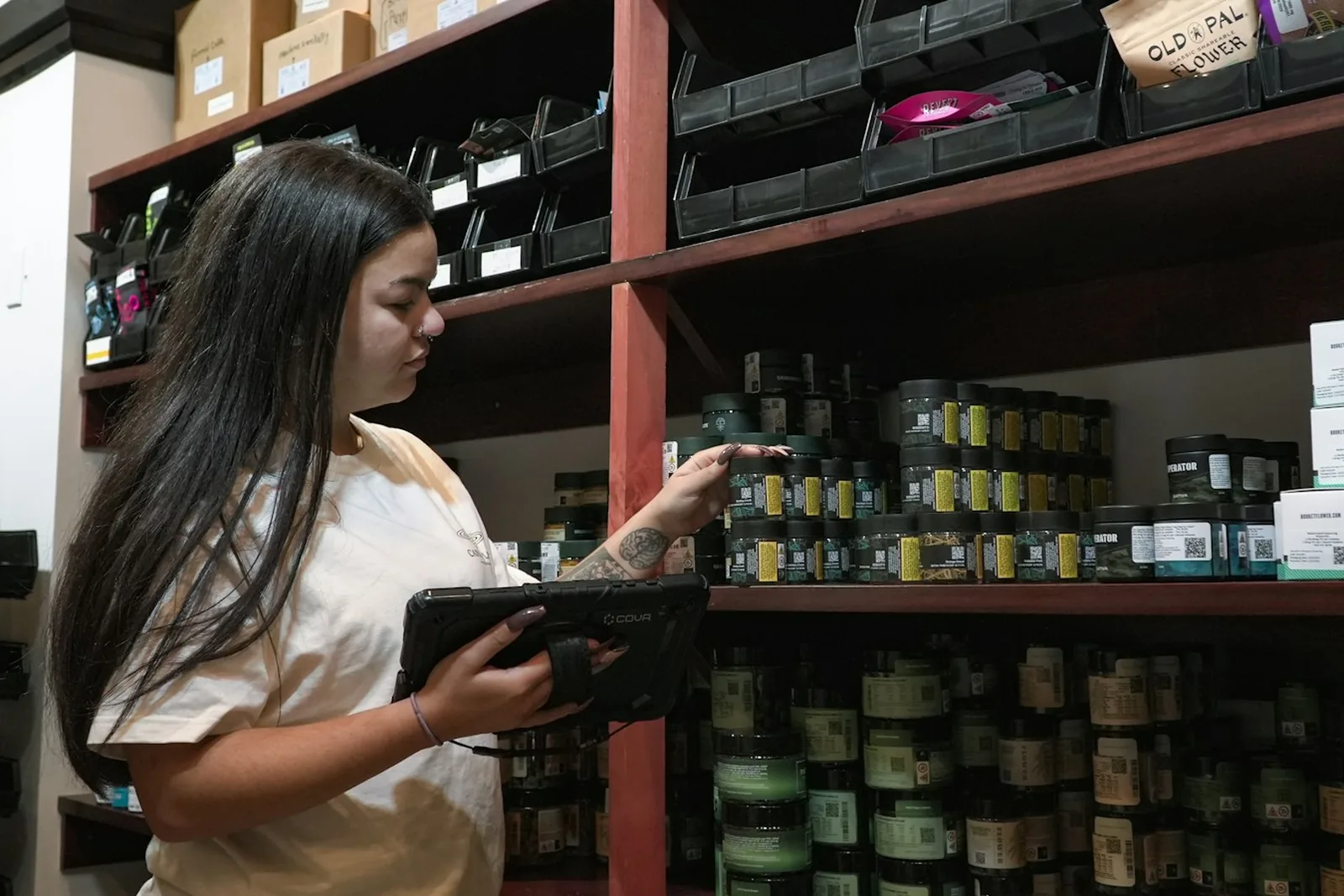
Local, editable, in the formats they already work in. The test is whether it gets used in the field, not whether it exists on a server.

For a category sold through contractors, recruiting installers is demand generation. Most manufacturers treat it as something the sales team does incidentally.

Brand terms routed by proximity rather than by whoever bids most, and territory rules written into the co-op program. Decided centrally, or it becomes a war you pay for.
How we run it
Five parts, and the last two are what most manufacturer marketing never gets to.
01 / 05
01
What is the difference between these two products, what does this actually cost, how long does it last. Homeowners search this constantly and manufacturers rarely answer it well.
02
Dealer locators that work, dealer pages that rank, and handoffs that are measured rather than assumed.
If you cannot measure the handoff, the dealer will not believe it happened
03
Most co-op money goes unclaimed because the process is harder than the money is worth. Fixing that is free growth.
04
Local, editable, in the formats they already work in. A brand portal nobody logs into is not distribution.
05
For a category sold through contractors, installer recruitment is a marketing function that usually sits with nobody.
The two funnels
The chain from search to dealer
DIAGRAMDemand through the year
CHARTWhat matters here
FAQ
Straight answers. If something is not here, ask us on the audit call.
Both, as two connected programs. Brand and category demand is yours to build. Conversion belongs to the dealer, and the handoff between them has to be measurable or the dealers will not believe it is happening.
Make claiming it easier than not claiming it, and give them assets already built for their market. Unclaimed co-op is usually a process problem, not a motivation problem.
As a campaign, with a real offer and a real funnel. Most manufacturers treat installer recruitment as something the sales team does incidentally, which is why it does not happen.
Very well, because homeowners research materials for months before they buy and almost nobody answers the comparison questions properly.
Territory rules in the co-op program, and brand terms that route by proximity rather than by whoever bids most. It needs to be decided centrally or it turns into a bidding war you fund.
Partially, and honestly. Store visit measurement is directional, and we will tell you where the estimate ends and the guess begins.
Let’s talk
Tell us about your business. We’ll show you where the growth is, within 48 hours.
Other industries
Roofing, siding, hardscape, remodeling. Including James Hardie contractors.
HVAC, heating oil, pest control, plumbing and the companies Long Island calls when something breaks.
Chiropractic, wellness and specialty practices that need patients, not just clicks.
Retail and direct to consumer, built on the same fundamentals as a local launch.
The deeper page for the one home-services trade where we can name four clients.
From the Blog
The same handful of findings show up in nearly every account we inherit. Here they are in order, so you can fix them yourself without hiring anyone.
Quotes that went quiet, last season's estimates, the week you were slammed. That list is the cheapest pipeline you own, and working it does not require hiring anybody.
The phone slows down in Q4 and most owners slow the spending with it. The auction slows down too, which is exactly why the last quarter is usually the cheapest work you will buy all year.