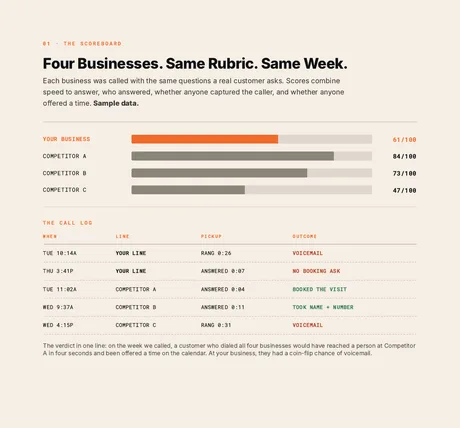
 See a Sample Report (PDF)
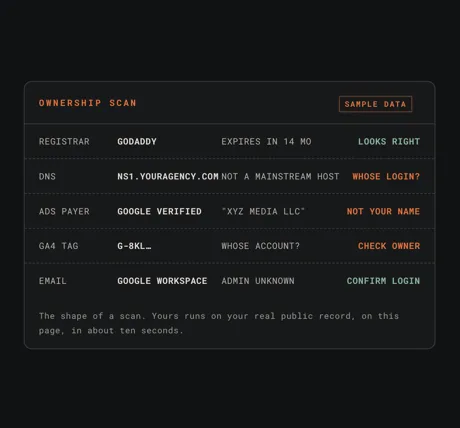 See What a Scan Returns
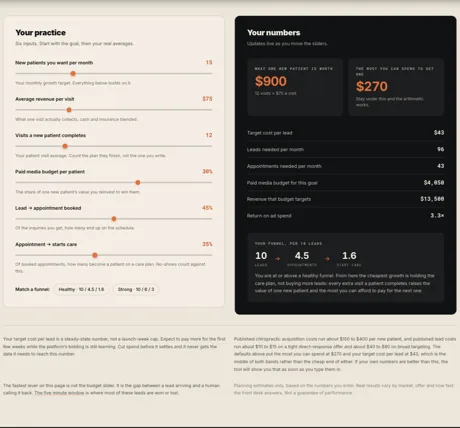 Run the Numbers
 Read the Latest
Do not hand the last quarter's budget back. Spend it on the two things that are cheaper now than they will be in March: the searches your competitors have stopped bidding on, and the tracking you never have time to fix during the season.
Every year we watch the same thing happen on Long Island accounts. The phone gets quieter in November, the owner reads that as demand disappearing, and the budget comes down or goes off entirely. In January the season restarts, the budget goes back up, and the account spends six weeks paying to relearn what it already knew in October.
That sequence costs more than it saves, and the reason is mechanical rather than motivational.
The Auction Empties Before the Demand Does
Cost per click is set by who else is bidding. When a share of your competitors pull back for the holidays, the same keyword costs less to win. The demand does not fall as far as the competition does, and the gap between those two curves is the cheapest inventory available to a local business all year.
This is most obvious in the trades that people research in winter and buy in spring. A homeowner reading about siding in December is not going to sign anything before April, but that reading is where the shortlist gets made. If you are absent from the shortlist because the campaign was off, no amount of April budget puts you back on it. The decision already happened.
Where the Money Should Go, In Order
Four places, ranked by how much of a Q4 dollar actually survives into next year.
- Keep the core search campaign serving, at a reduced cap. Not paused. A campaign that stays on holds its history and its position; a campaign that goes dark hands both away and pays to rebuild them in the spring. Reducing the daily budget is a dial. Pausing is a switch, and the switch is more expensive than it looks.
- Fix the tracking. Conversion actions, call tracking, the form that routes to the wrong inbox, the thank-you page nobody has checked since the site was rebuilt. Every one of these is invisible while it is broken and none of them can be fixed during the busy season, because nobody has an hour. December has the hour. We wrote separately about fixing tracking is the other half of the job.
- Buy the research-phase searches nobody else wants. "How much does X cost", "X vs Y", "best X in [town]". These convert badly this month and convert extremely well four months from now, through the same brand name the reader saw in December. They are priced on this month's conversion rate.
- Write the town pages. The ones you keep meaning to build for the towns your trucks actually reach. A page published in December has a full quarter to be crawled, indexed and start ranking before the season. A page published in April is competing from zero in the month you needed it.
What Not to Do With It
Do not spend it on a new channel in December. Every channel has a learning period and a cold start, and starting one in the slowest month means you evaluate it on its worst possible data, then conclude it does not work. It might work. You will never know, because you tested it in the one window that guarantees an unclear answer.
Do not spend it on a burst. Doubling the daily budget for two weeks produces a spike in impressions and nothing durable. Smart Bidding treats a sudden budget change as a new problem to solve, and the solving happens on your money.
Do not spend it on anything you will not still be running in March. The test for a Q4 dollar is whether it buys something that survives the quarter: a fixed tracking setup, an indexed page, a campaign with its history intact, a name on a shortlist. A dollar that buys a December impression and nothing else was a dollar you could have kept.
The Capacity Question Comes First
There is one honest exception. If you are booked into spring and genuinely cannot service another job, reducing spend is correct, and it is correct for the right reason: spending should follow capacity rather than run ahead of it. But reduce it to the level that keeps you visible, not to zero, and be specific about what you are buying with what is left. Being findable in January is worth paying for even in a month you cannot take the work.
The mistake is not cutting the budget. The mistake is cutting it without deciding what the remaining money is for.
What This Looks Like on a Real Account
Pick one afternoon before Thanksgiving and do four things in order. Reduce the daily caps to a level you are comfortable holding through December. Open the conversion actions and confirm each one is still firing and still counting what you think it counts. Pull the search terms report for the last ninety days and write down every research-phase query you are not currently bidding on. Then list the towns you serve that do not have a page.
That afternoon is worth more than the same hours spent in March, because in March you will not have them.
Frequently Asked Questions
- Should I just pause ads in December?
- Almost never. Pausing resets the learning a campaign has accumulated and hands your position to the competitor who stayed on. If the budget genuinely has to come down, reduce the daily cap and keep the campaign serving rather than switching it off.
- What is a reasonable Q4 budget cut for a seasonal trade?
- Cut to the level your capacity can still absorb, not to zero. A roofing company booked into March still wants to be the name a homeowner finds in January, and the January search happens because of the December impression.
- Does unspent budget roll over?
- No. An ad budget is not a bank balance. Money not spent in the quarter is not available later, it is simply not spent, and the demand it would have captured goes to somebody else.