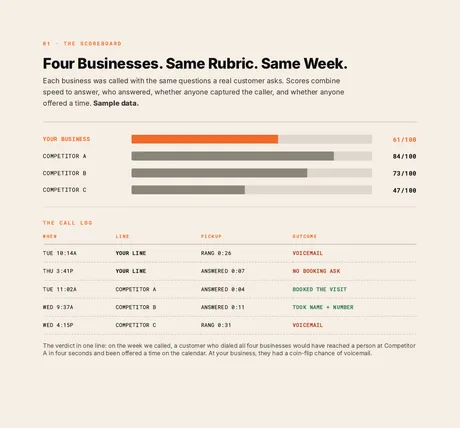
 See a Sample Report (PDF)
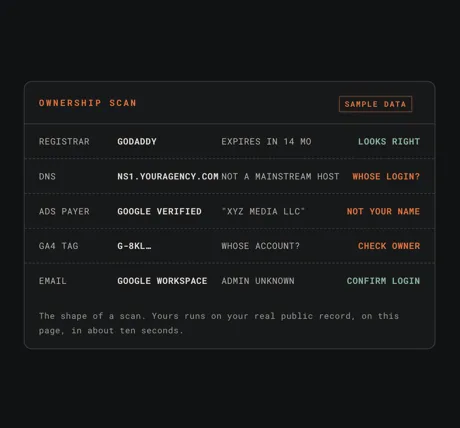 See What a Scan Returns
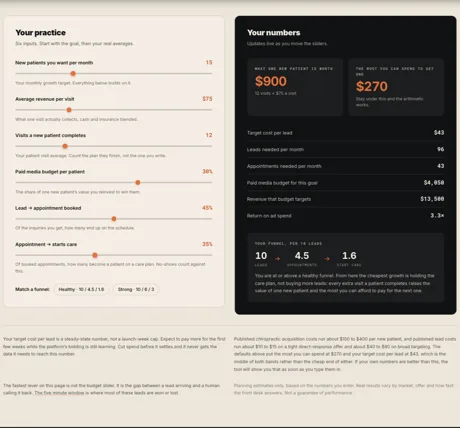 Run the Numbers
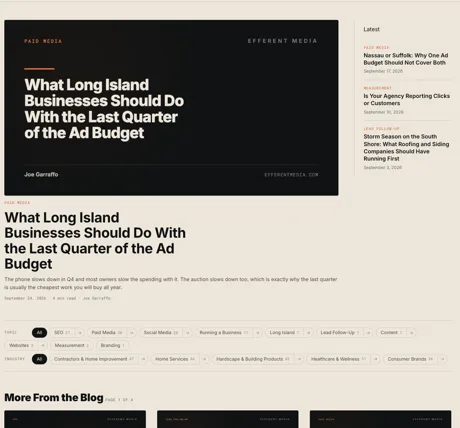 Read the Latest
I started Efferent Media in Lindenhurst in 2011. In that time search has been rebuilt several times over, social has had four golden ages, and a great deal of confident advice has aged very badly.
Four things genuinely changed. The list of things that did not is shorter, and it is the more useful half.
What Changed
The map replaced the list. In 2011 a local business competed for ten blue links. Now, for most of the searches that matter here, the top of the result is a map with three businesses in it and the rest is below a fold most people never reach. That single shift moved more value into the Google Business Profile than into anything else a local business owns, and most profiles here are still half filled in.
The phone became the whole thing. Not just the majority of traffic. It changed what a good page is. A page that reads well on a desktop and asks for a scroll on a phone is a page that loses. It also made speed a real competitive variable rather than a technical footnote.
Advertising got easier to run and harder to run well. The platforms automated most of the levers we used to pull by hand. That took a whole tier of manual work off the table and replaced it with a different job: deciding what to feed the system. An automated bidding strategy pointed at a bad conversion signal will spend a budget with total confidence and produce nothing.
Answers started getting assembled rather than listed. A search engine increasingly writes a response instead of handing over links, and it draws that response from a narrow set of sources it already trusts. For a local business this is less dramatic than it sounds and more mechanical: the things that make you a credible source are the same things that ranked you before, done properly.
What Did Not Change
People buy from people they trust, and on Long Island they ask a neighbor first. Every channel that works here works because it supports that, not because it replaces it. The review that mentions your crew by name is doing more than any ad.
Speed of response decides more jobs than price. This was true in 2011, it is true now, and it is still the most common thing we find broken on a new account.
Geography is stubborn. Huntington does not get calls from Massapequa. The North Shore and the South Shore behave differently. A radius on a map still includes water. None of this has moved an inch in fifteen years and it still breaks campaigns built by people who are not from here.
Nobody has ever been talked into a roof. Demand for most of what our clients sell is created by a problem, not by an ad. The work is being the name they find when the problem arrives, which is a very different job from persuasion and gets confused with it constantly.
What I Would Tell Somebody Starting Now
Pick the surfaces where people are already looking for what you do, own them completely, and answer the phone. That is most of it.
The businesses here that have grown steadily over fifteen years did not do anything clever. They were consistently findable, they responded fast, and they did good work that produced reviews that made them more findable. Everything else we do is in service of that loop.
The rest of the advice, mine included, has a shelf life. That does not.
Frequently Asked Questions
- Is SEO still worth it for a local business?
- Yes, and more than it was, because the surfaces that matter narrowed. The map pack and the answers a search engine assembles both draw from the same signals, so the work compounds across both instead of only one.
- Should a small business still have a blog?
- Only if it is answering questions customers actually ask. Publishing on a schedule to hit a volume target stopped working years ago and now actively costs you.
- What is the biggest waste you still see?
- Paying for traffic into a process that cannot receive it. That was true in 2011 and it is true now, and it is still the most common expensive problem on Long Island.