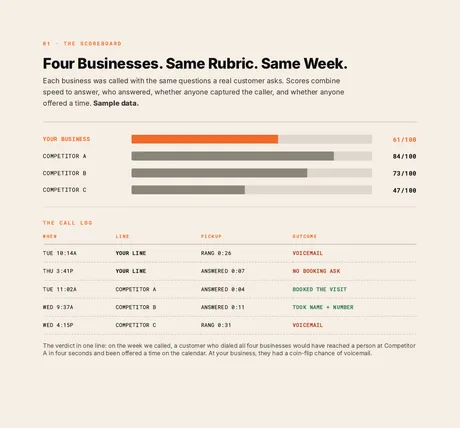
 See a Sample Report (PDF)
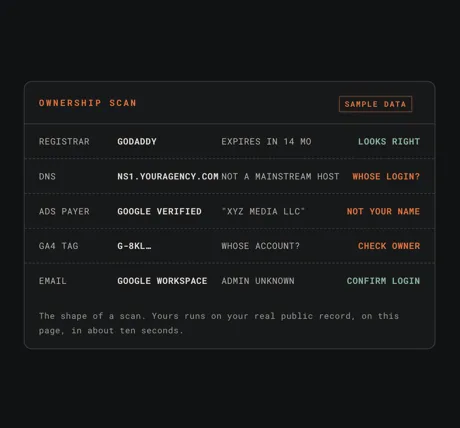 See What a Scan Returns
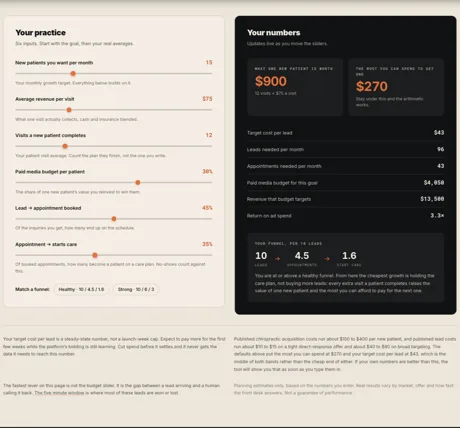 Run the Numbers
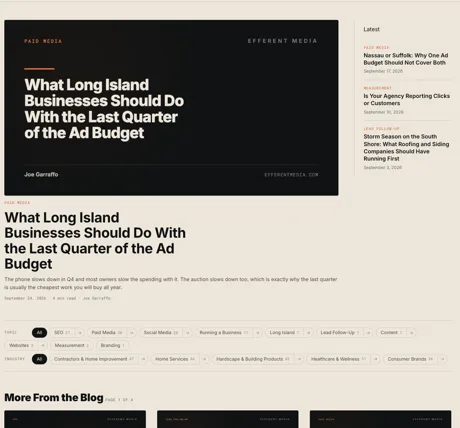 Read the Latest
The useful summary is narrow: research that took a week takes an afternoon, reporting that took a day runs overnight, and the judgment about what to do with the result is the part that was always scarce and still is.
For a local business the value is the same shape. The repeatable work gets cheaper, so more of the budget can move to the work that changes revenue. That is the whole claim, and it is smaller than the marketing around it suggests.
One thing did genuinely change, and it is worth understanding properly.
What Actually Moved
A search engine increasingly assembles an answer instead of handing over a list of links. When somebody asks which company to call, or what something should cost, or whether a problem is urgent, a growing share of the time they get a written response naming a few sources.
That changes the competitive question from "do I rank" to "am I one of the sources this thing trusts."
The disappointing and important part: the inputs are the same ones that already mattered. There is no separate AI lever. A system assembling an answer about roofing in Suffolk County draws from pages that clearly answer that question, from a business profile whose details are consistent everywhere, and from mentions on sites that already have standing. All three were on the list before.
What is different is the payoff shape. Ranking fourth used to be worth something. Being the fourth source in an assembled answer is frequently worth nothing, because the answer names two.
Three Places It Pays Inside a Business
Set the search question aside. Inside an operation, three uses are measurable, which is the test we apply before building anything.
Answering inside five minutes, at any hour. The highest-return automation available to a local business, and it is not sophisticated. An acknowledgment that arrives in a minute and sets a real expectation holds a lead that silence loses.
Working the list nobody calls back. Quotes that went quiet, last season's estimates. A sequence keeps asking, politely, at no marginal cost.
Assembling the reporting. Pulling numbers from four systems into one page overnight. This one saves hours rather than making money, and it makes the hours it saves available for the decisions.
Notice what is not on the list: deciding the budget, deciding which channel to cut, deciding whether a lead was real. Those are judgments, they have consequences, and handing them to a system that cannot be held accountable is how you end up with a confident, plausible, wrong answer nobody can trace.
The Part That Should Make You Cautious
A machine will produce a number with the same confidence whether it can see the data or not. That is the defining risk, and it is not theoretical.
A coverage gap and a genuine zero render identically. A report that says a channel produced two jobs looks exactly the same whether the channel produced two or whether the tracking could only see two. The first is a business problem and the second is a measurement problem, and they have opposite responses.
So the discipline is boring and it is the whole thing: know what each number can actually see, label the estimates as estimates, and treat a result that contradicts your own data as a stop signal rather than a footnote.
What We Tell Clients
AI is the engine, not the product. Nobody buys AI. They buy leads, customers and revenue, and this makes producing those cheaper and faster in specific, nameable places.
Where it does not help, we say so, because a tool that gets oversold once stops being trusted for the things it genuinely does well.
Frequently Asked Questions
- Do I need to do anything differently for AI search?
- Mostly the things that were already correct: answer real questions plainly, keep your business information consistent everywhere, and earn mentions on sites that already have credibility. There is no separate lever, which is unsatisfying and true.
- Is AI writing your blog posts?
- We use it to research and draft faster. A person decides what is true, what is worth saying, and signs it. That distinction is the whole difference between useful content and volume.
- Will AI answers reduce clicks to my site?
- For informational queries, yes, and that is already happening. For a query with an intent to hire somebody locally, the result still sends people to a business, because the answer to "who should fix this" is a business rather than a paragraph.