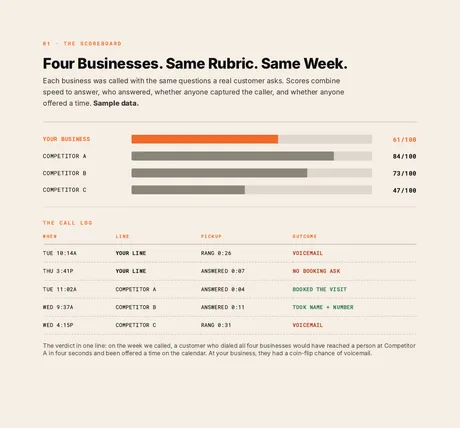
 See a Sample Report (PDF)
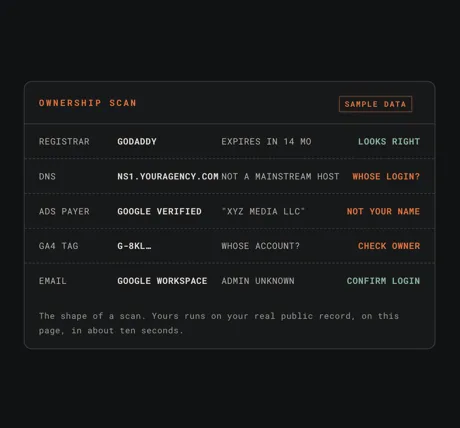 See What a Scan Returns
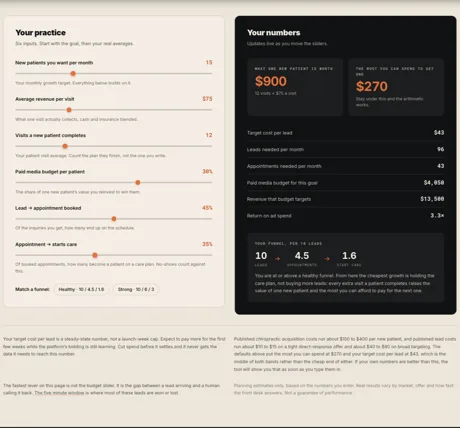 Run the Numbers
 Read the Latest
For high ticket home improvement on Long Island, the first search and the signed contract are months apart. A homeowner reads about siding in January, gets quotes in March, and books work for May. If you were not visible in January, you were not one of the three people they called in March.
That gap is the single most misunderstood thing about marketing a trade here, and it produces the same mistake every year: budgets that arrive in spring, pointed at a decision that was already made.
What the Winter Searches Look Like
They do not look like buying. That is the problem.
In the quiet months people search costs, comparisons and durability. How much does a roof cost. Fiber cement versus vinyl. How long do windows last. Is it worth replacing gutters. None of those convert this week, and judged on this week they look like waste.
What they do is build a shortlist and a sense of who is credible. By the time somebody searches for a contractor near them with intent to call, they are frequently confirming a name they already have rather than discovering one.
Why Spring Budgets Arrive Late
Spring feels like the right time to spend. The phone is ringing, the season is proven, the money is there.
But spring is when you compete for the people who already decided, against every other contractor doing exactly the same thing, in the most expensive auction of the year. You are paying peak prices to be considered by people whose list was written in a month you skipped.
The same money in winter buys a thinner auction and reaches people at the moment the list is still open. The off season argument is the general version of this; for contractors specifically it is sharper, because the consideration cycle is longer than almost any other local category.
What Has to Be Visible in the Quiet Part
Four things, and only one of them is an ad.
Content that answers the winter question. Cost ranges, material comparisons, lifespan, what is involved. Written plainly, without a sales pitch in the first paragraph. This is the thing people are actually reading in January and most contractors have none of it.
A complete profile with recent photographs. Somebody checking you out in January is looking for evidence you are real and local and busy. A profile whose newest photo is from two summers ago answers that question badly. What that profile should contain is worth an hour of your winter.
Reviews with responses. Volume matters, recency matters, and whether you reply matters to a human reading them, which is who is reading them.
A modest, continuous ad presence on the research terms. Not full season spend. Enough to be in the results when the reading happens.
The Measurement Trap
Judge this on last-click attribution and it will always look like a failure, because the click that closes in April gets the credit and the January click that created the shortlist gets nothing.
Two better ways to see it, both available without new tooling:
- Ask. Add one question to your intake: how did you first hear about us, and roughly when. Not perfect, and far better than nothing.
- Watch branded search. If people are searching your company name by name in March, something made them aware of you earlier. That curve is the clearest evidence a winter presence is working.
The Split That Makes This Workable
Most contractors here sell two businesses under one roof and run them as one campaign, which is why neither performs.
Emergency work is immediate, urgent and won on being reachable in the first hour. It deserves its own campaign, its own page, and a phone plan. Storm response is the extreme version.
Planned work has the four month gap. It deserves content, patience, and a budget that does not switch off in the months when it looks unproductive.
Running them together averages two completely different buying behaviors into one set of numbers that describes neither, which is the same error as running two counties on one budget.
What to Do Before January
Write the three pages that answer the winter questions. Bring the profile current. Set the research campaign live at a budget you can hold through February without flinching.
Then leave it alone until March, and judge it on what the spring produces rather than on what January books.
Frequently Asked Questions
- If they are not buying in January, why pay for those clicks?
- Because the shortlist is written in January and nothing in April edits it. You are not buying a January job, you are buying a place on the list that produces the April job.
- How do I measure something that converts four months later?
- Not on last-click, which will always make the research phase look worthless. Look at whether people who first touched you in winter show up in spring, and at whether your branded search volume rises after a winter of visibility.
- Does this apply to emergency work too?
- No, and that is the useful distinction. Emergency demand is immediate and is won on being reachable. Planned work has the long gap. Most contractors sell both and should run them as separate campaigns with separate expectations.