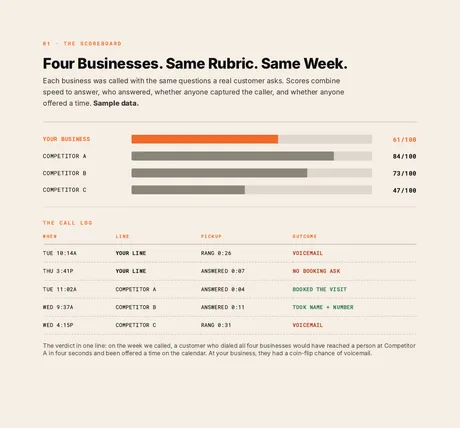
 See a Sample Report (PDF)
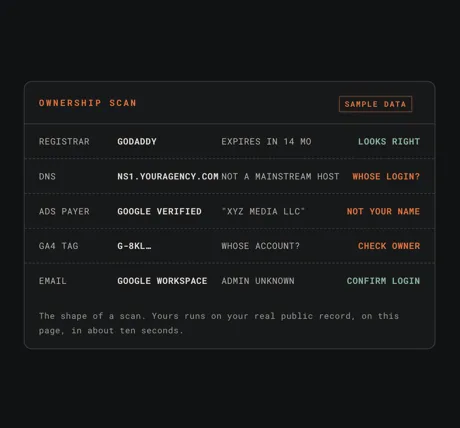 See What a Scan Returns
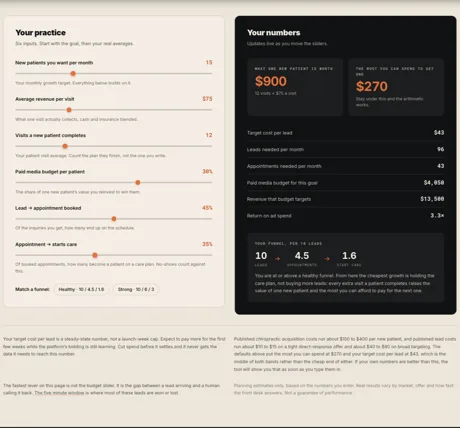 Run the Numbers
 Read the Latest
If you start a campaign from nothing on January 2, you are paying for three separate things at once, and only one of them is advertising.
You pay for the learning period, which is real money spent while a bidding system works out who converts. You pay a fuller auction, because every competitor who paused for the holidays is back. And you pay the opportunity cost of not having existed during the weeks when your spring customers were deciding who to call.
The same campaign started six weeks earlier costs less on all three counts and books the same work.
What a Cold Start Actually Costs
Three distinct charges, and it is worth separating them because only the first is obvious.
The learning period. Any automated bidding strategy needs a run of conversions before its guesses get good. Until then it is spending your money to find out things a campaign with history already knows. That cost is unavoidable at some point. It is entirely avoidable in January specifically.
The crowded auction. Everybody restarts on the same day. Budgets reset, the field refills, and the cost to win the same click goes up for reasons that have nothing to do with you. Starting in a thinner auction and carrying that position into a fuller one is a meaningfully different trade.
The missing weeks. This is the expensive one and it does not appear on any invoice. Somebody researching a roof in December is not buying in December. They are building a shortlist. A campaign that did not exist then is not on it, and no January budget retroactively adds you.
The December Version of the Same Plan
Take whatever you were going to spend in January and split it. Run a fraction of it from early December on a narrow, high-intent set of terms, and hold the rest.
What that buys:
- The learning period happens on cheaper clicks. Same tuition, lower tuition rate.
- A tracking shakedown while the stakes are low. Broken conversion actions and misrouted forms are discovered on a quiet week rather than during your first real rush.
- Presence during the shortlist window, which is the whole argument.
- A real baseline. By January you have four to six weeks of your own data instead of a competitor's benchmark and a hope.
By the time January arrives you are not starting. You are scaling something that already works, which is a completely different and much cheaper exercise.
If the Money Genuinely Is Not There Until January
That is a normal constraint and it does not waste the argument. Everything that costs nothing can still happen in December.
- Build the campaign and leave it paused. Keywords, ad copy, extensions, negatives, targeting. Enabling takes a minute; building takes a day you will not have in January.
- Fix the tracking. Conversion actions, call tracking, where the form goes and who gets alerted.
- Write the landing page. The one the ads will point at, rather than the homepage they will point at by default.
- Finish the profile and the town pages. These take weeks to be crawled and start earning, so December work is January position.
None of that is billable to an ad platform and all of it removes the January scramble.
The Pattern Underneath
This is the same argument as the off-season one and the Q4 budget one, pointed at a different month, and it is worth naming because it decides more than advertising.
Demand is seasonal. Competition is more seasonal than demand. The gap between those two curves is where a local business buys cheaply, and it is always open exactly when the phone is quiet and it feels least comfortable to spend.
The businesses that have the best springs around here are not the ones that spent the most in spring.
What to Do This Week
If you are planning a January start, move the build to December and the money to whatever fraction you can defend. If you cannot move the money, move the work. Either one removes most of the cost of a cold start.
And if you want the December list built for you, that is part of the free marketing audit, which is the right thing to run in November rather than in February.
Frequently Asked Questions
- How long is a learning period really?
- Long enough to matter. A bidding strategy needs a run of conversions before it performs predictably, and on a local account producing a handful of leads a week that is measured in weeks rather than days. The exact number is less useful than the planning consequence, which is that the first stretch of any new campaign is tuition.
- Is it better to start small in December or full in January?
- Small in December, almost always. A smaller budget that has been running for six weeks outperforms a larger one that started on the first, because one has history and the other is guessing.
- What if the budget is not approved until January?
- Then start the parts that cost nothing: the pages, the tracking, the negative lists, the profile. The campaign can be built and paused, ready to enable the day the money exists.